Thursday, February 11, 2016

Otaru, Hokkaido

On the second day that I was in Hokkaido we started the day before dawn. We drove from the ferry in Tomakomai to the city of Otaru. It was too early to go to a restaurant for breakfast, so we stopped at a 7-11.

Convenience stores are very respectable here. It's not the highest quality food, but you can get a warm rice ball, a hot bun, fruit, etc. Compared to convenience stores in the US, I think the stores here have less bagged snack food and fewer varieties of soda, in exchange for a wider selection of everything else.

The next place we went was to a park. At this time the sun was above the horizon but still hidden by clouds. There were a number of boats here. While I was looking at the sunrise people were slowly arriving and getting on the boats. It must not have been very long before they left the port. There were also some fishermen by the water.

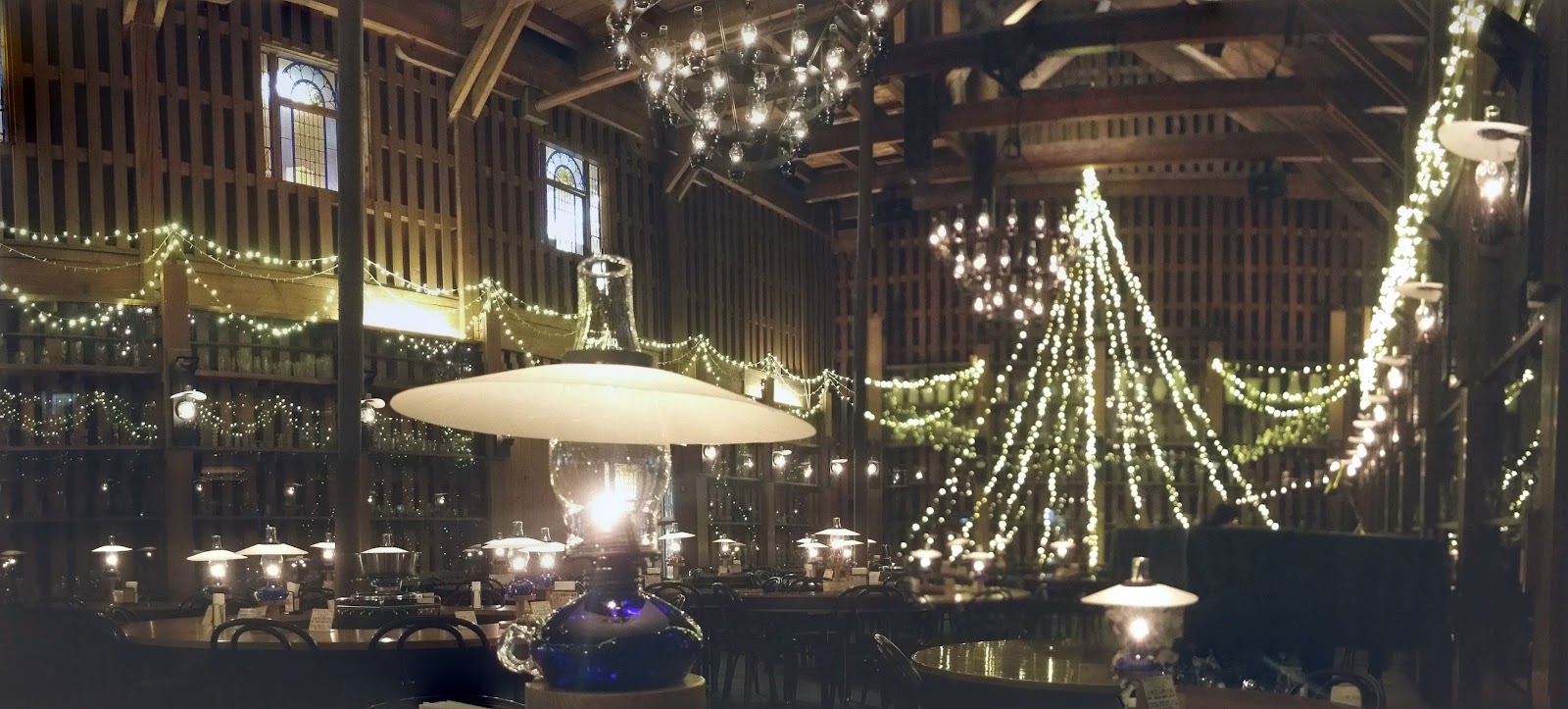
Otaru has a famous canal that we went to see. After that we went to a restaurant that was lit by many kerosene lanterns.
We went to a tower with a view of the city. Below there is a video of the pedestrian traffic at one of the intersections.

There was a temple on the top of a hill overlooking the city. While me and one friend were up here, it was very quiet, but occasionally we would hear a soft drum from inside the temple.

Lastly, we stopped and had lunch. We picked out the food we would have from a large tank. Otaru is known for its seafood and I think that this is deserved. It was very good. The plate on the left had an uncooked sea urchin, but I don't remember the name of the one on the right.

Monday, February 8, 2016

Ferry to Hokkaido

This past week I took a trip up to an island of Japan called Hokkaido. To get there me and some other students took a ferry from the nearby city of Niigata to Tomakomai in Hokkaido.

To get to the ferry we left earlier than I would have liked. Above is a photo of the sunrise from Aizu when we were leaving.

When the boat left, many seagulls followed us looking for food.

Here I took a picture with some of my travel companions.

On the ride there there were not so many things to do. This boat had an arcade, a bath, several restaurants, and a shop for buying souvenirs. I found a spot by a window and watched the ocean as we traveled.

Some people fell asleep outside of their cabins in strange positions.

We got to our destination very early in the morning. I got off the boat and proceeded to fall asleep immediately in the car as we drove off to our first destination.

Tuesday, February 2, 2016

Ueno Park

Last week I had some time without classes, so I went to Tokyo for three days. While I was there I visited Ueno Park. I have been to this park a few times now, and there are a lot of things to see.

Above is a giant panda in a box. It is by an exit from Ueno station. Beneath it is a photo of a large bridge connecting the Ueno station exit with the panda to Ueno Park. It is called Panda Bridge. One of the reviews on google maps for the Panda Bridge (spelled incorrectly as Panda Briage) is pictured below.

One of the times I went to the park it was in the middle of December, and there were many leaves on the ground.

There are also some shrines and temples throughout the park.

By one of the temples in the park is this small memorial. It is in memory of the deaths at Hiroshima and Nagasaki. Beneath is a photo of the sign in front of it.

Saturday, January 30, 2016

Soma City Memorial Center

On the last day of the Fukushima tour we visited the city of Soma. Soma is on the eastern coast of Japan, and so it was severely damaged by the 2011 earthquake, tsunami, and nuclear reactor damage. In Soma, we visited a memorial center by the ocean.

At the memorial center we watched a presentation telling the story of one of the local fishermen. The story was very sad. It told how when the fishermen heard about the tsunami they were concerned about their boats, and they left their homes to bring the boats away from shore.

After the tsunami had passed, some boats were saved, but many of the fishermen lost their families. The title of the presentation was "The most important thing", and told how after the Tsunami the surviving fishermen realized how much more important their families had been than their boats.

The memorial center had copies of newspapers and photographs of the deceased. Before I went on this trip I was only aware of the damage from the Fukushima reactor, but to the people of Soma, the tsunami was the most devastating part of the disaster.

On the memorial below there is a beer, a bottle of coke, and three cans of coffee.

These are some photographs of small playground that I took by the memorial center. I didn't get to ask, but it looks like they were damaged in the Tsunami 5 years ago, and have been untouched since.

This may not be a traditional memorial, but it tells of the destruction of the tsunami and how some parts of Japan are still rebuilding from the disaster.

Monday, January 18, 2016

Study Tour Day 2

During the second day of the tour we did another craft activity. These egg-shaped faces are called Shirakawa Daruma. They are made to represent wishes. In the photo below you can see that the yellow Daruma has only one eye. If you are waiting for the wish then the Daruma has only one eye. If the wish is for your whole life, then you will paint both eyes.

In the morning after we left the hotel, we went to a park in the Shirakawa area. Nanoko Park. Dango is the snack pictured below. We had dango that was prepared in the local style. In the spring this park is a popular location for cherry blossom viewing.

Hanami (花見, literally "flower viewing") is an interesting tradition in Japan. In the spring when the cherry trees blossom and I experience it myself, I will be sure to make a post about it.

After we ate lunch we went on a boat tour of the Iwaki harbor. It was enjoyable to see the ocean, and we went on a very pretty day.

In the background of this photo you can see a giant glass structure. That is Aquamarine Fukushima, and it was the next stop on our tour.

When we were getting our tickets, I had a long conversation with a Taiwanese friend about the pronunciation of aquamarine. He found the pronunciations of aquamarine, aquarium, and aqua all difficult.

One really neat part of this aquarium was a demonstration of two major ocean currents that met near Fukushima. There are two tanks with the different fish from each current, and you can walk between them and see the fish on either side.

This aquarium was hit very severely by the 2011 earthquake and tsunami. Because it is on the coast, when the tsunami came all of the employees in the building had to take shelter on the highest floor of the building. In the aftermath, there was no water or electricity with which to maintain the tanks. When employees were evacuated to shelters because of the nuclear reactor, some of them went so far as to take fish with them to the shelters. Below you can see a what the ocean current exhibit looked like some time after the disaster.

From the hard work of the employees, the aquarium was able to reopen just four months after the disaster. I found it to be a very pretty aquarium.